- Learn by Reclamation Ventures
- Posts
- "How do I help my direct reports work better together?"
"How do I help my direct reports work better together?"
Managers should be coaches, not crisis counselors, when conflict arises with their employees.

Nicole Cardoza
May 06, 2026

News and insights to reimagine how we work and thrive.
adrienne marie brown told us that "conflict isn’t the adversary of connection...it allows us to feel seen. It allows us to see the other person more wholly & clearly."
This is true, but it sure doesn’t feel like that sometimes. Conflict can make us question the strength of the relationships we once held dear, and make us wary to attempt to repair broken bonds.
As leaders, it’s up to us to steward this–both in how we approach conflict in our own lives, and how we encourage others to do the same. We may feel called to manage conflict on behalf of others, which takes away their opportunity to experience the connection that’s sparked by its resolution.
Today’s newsletter offers advice for those of us feeling pressured to play peacemaker. I work with many socially minded organizations where conflict aversion is common, and I often hear this question.
I’d love to hear if this resonates with you. Reply to this email or book some time to chat.
-Nicole (follow me on LinkedIn for more)
"How do I help my direct reports work better together?"
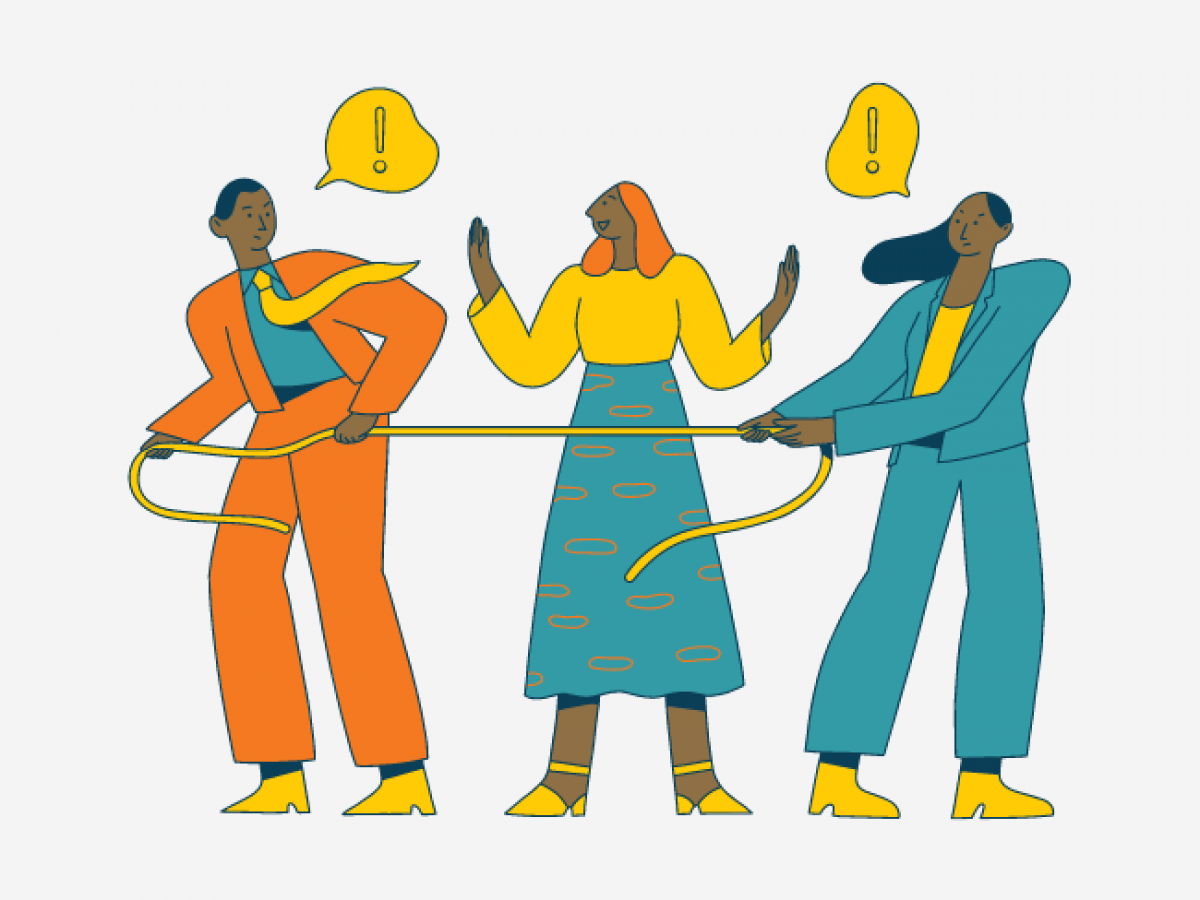
"One of my direct reports came to me upset about a conflict with a colleague. I asked if they'd tried talking to the person directly first, and they said they 'shouldn't have to.' I'm torn between supporting my employee and not wanting to be the middleman for every workplace issue. What's my actual role here?"
When an employee says they "shouldn't have to" address issues directly, they’re setting a boundary on how far they’re willing to engage, which makes managers feel they need to bridge that gap. I’m curious to what extent that this behavior is enforced, or even encouraged, by your workplace culture? Was that an implicit or explicit responsibility assigned to you by your role? Is the default that managers navigate conflict on behalf of others? Asking these questions – to yourself, your peers, and your direct report, where applicable – can help to shape whether or not you need to intervene.
But let’s address the issue at hand. Ideally, your role is that of a coach, not a crisis responder. Start by validating their feelings: "I can see this situation is really frustrating for you." Then pivot to skill-building: "Let's think through how you might approach this conversation. What outcome are you hoping for? What tools are available for you?"
You can provide support by offering to roleplay the conversation, provide scripts for difficult topics, or even facilitate an initial discussion between them. But, unless it’s clear your organization has set this precedent or there’s a threat to the parties’ immediate safety, make it clear that cannot handle their interpersonal relationships for them. Most conflicts between peers need to be resolved between peers—your job is to give them the tools and confidence to do it well.
A side note: it sounds like your organization hasn’t created a formal conflict resolution policy. Every organization, but conflict-averse ones like yours, can benefit from comprehensive workplace conflict policies and procedures. Consider scheduling time with other key stakeholders to discuss your ideal approach to conflict, gather other examples like the issue you’re addressing now, and what resources you have to start the process.

 | Rupture & RepairTuesday, June 16 | 3-5pm EST Learn how to navigate moments of tension and conflict as they arise. Participants will learn practical, real-time strategies for de-escalating situations, intervening effectively, and rebuilding trust after moments of rupture. We’ll develop a personalized toolkit for addressing workplace tensions while maintaining cultural awareness and psychological safety. |
 | Conflict EvolutionWednesday, June 17 | 3-5pm EST Go beyond conflict resolution and apply a culturally-responsive, inclusive framework to navigating challenging conversations, mediating tense scenarios, and fostering understanding with opposing viewpoints. |

Looking for a custom session for your workplace? Book time with our team to discuss how we can facilitate a workshop, mediation session or advise you on how to navigate tension.
Learn is the consultancy arm of Reclamation Ventures, an award-winning venture studio that’s created well-known brands like Reimagined, Banned Books Book Club, and the RV Fund. Over the past five years, we’ve helped organizations create more inclusive and equitable spaces through trainings, workshops and hands-on consulting.